


NEWSnews
Advancing Electrical Safety: A Technical Overview of YD(JZ) AC/DC Hipot TestSets
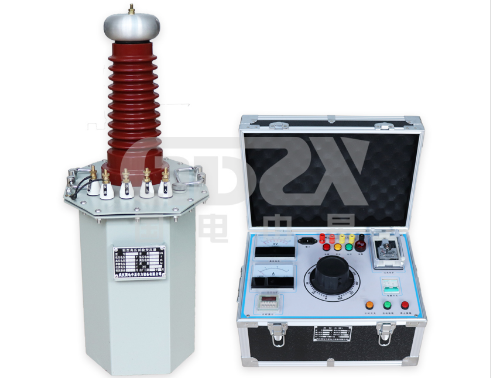
The YD(JZ) AC/DC Hipot Test Set represents a robust and essential solution for verifying the dielectric strength and insulation integrity of electrical equipment and components. As a critical procedure in preventive maintenance and quality assurance, hipot (high-potential) testing directly assesses insulation's ability to withstand over-voltage conditions, effectively identifying latent flaws such as poor insulation, damaged wiring, or insufficient clearances that could lead to catastrophic failure, electric shock, or fire hazards. This system ensures that electrical apparatus—from capacitors and insulating materials to complete assemblies—can operate continuously and safely under rated voltages.
Core Technology and Operation
The test set operates by applying a significantly higher AC or DC voltage than the equipment's normal operating voltage between its live parts and ground. The control unit, working in tandem with a dedicated testing transformer, precisely regulates this high voltage. The YD(JZ) series utilizes a reliable oil-immersed testing transformer design. This traditional yet proven technology offers excellent thermal stability and insulation properties, contributing to the system's overall reliability and durability during extended test durations.
Key Technical Features & Advantages
1.High Reliability & Stability: The oil-type testing transformer ensures consistent performance and stable high-voltage output, which is fundamental for repeatable and accurate test results.
2.Large Voltage Stability Margin: The design incorporates a substantial margin between the operating voltage and the breakdown threshold of its internal insulation. This margin guarantees that the tester itself remains stable and does not flash over during the testing of the device under test (DUT), even when applying voltages up to its maximum rated output.
3.Minimized Corona & Partial Discharge: Advanced design and material selection result in low corona levels and minimal partial discharge within the tester. This is crucial because excessive discharge from the test equipment could interfere with measurements, damage sensitive DUTs, or give false failure indications.
4.Compact & Lightweight Design: Employing modern high-grade insulation materials allows for a more efficient transformer design. This translates to a significant reduction in overall size and weight compared to older technologies with equivalent output, enhancing the system's portability and ease of setup in lab or field environments.
Model Specifications and Selection Guide
The YD(JZ) series offers a versatile range of models to cater to various testing voltage and capacity requirements. The model nomenclature (e.g., YDJ(Z)-50/100) typically indicates the rated capacity (50 kVA) and the maximum AC output voltage (100 kV). DC output voltages are generally √2 times the AC rating (e.g., 140 kV DC for a 100 kV AC model).
Technical Parameters Table (Representative Selection)
Model | Capacity (kVA) | HV Voltage (kV) | HV Current (mA) | Low Voltage Input | Turn Ratio | Temp. Rise (°C, 30min) | |||
AC | DC | AC | DC | Voltage (V) | Current (A) | ||||
YDJ(Z)-5/50 | 5 | 50 | 70 | 100 | 15 | 200 | 25 | 500 | 10 |
YDJ(Z)-50/50 | 50 | 50 | 70 | 1000 | 100 | 380 | 132 | 500 | 10 |
YDJ(Z)-10/100 | 10 | 100 | 140 | 100 | 50 | 200 | 50 | 1000 | 10 |
YDJ(Z)-50/100 | 50 | 100 | 140 | 500 | 100 | 380 | 130 | 1000 | 10 |
YDJ(Z)-100/150 | 100 | 150 | 210 | 667 | 150 | 380 | 263 | 1000 | 10 |
Selection Criteria for Technicians:
1.Test Voltage: Choose a model whose maximum AC/DC output exceeds your required test standard voltage.
2.Load Capacity (kVA): The capacity must be sufficient to supply the capacitive charging current of the DUT at the test voltage without significant voltage drop. Larger or highly capacitive loads (e.g., long cables, large transformers) require higher kVA ratings.
3.Input Supply: Match the low-voltage input requirement (200V or 380V) with the available site power.
4.Current Output: Ensure the tester's AC and DC output current ratings meet or exceed the expected leakage current of the DUT during test.
Application and Best Practices
This test set is indispensable for type tests, routine factory production tests, and field commissioning of electrical equipment. When operating:
1.Always follow strict safety protocols: establish safety perimeters, use grounding sticks, and ensure proper grounding of the test set and DUT.
2.Connect the control unit correctly to the matching testing transformer.
3.Set the test voltage and duration according to the relevant standard (e.g., IEC, ANSI/IEEE).
4.Monitor the leakage current continuously. A sudden increase or trip indicates insulation breakdown.
5.After testing, diligently discharge any stored capacitive energy in the DUT before handling.
The YD(JZ) AC/DC Hipot Test Set, with its blend of traditional oil-transformer reliability and modern design improvements, provides technicians and engineers with a trustworthy tool for ensuring the fundamental safety and quality of electrical insulation, thereby protecting both equipment and personnel.
GDZX is a manufacturer of power detection equipment, offering a diverse range of products with comprehensive models and providing professional technical support. Contact us at +86-27-6552607 or +86-17396104357.Website: http://en.gdzxdl.com/


