


NEWSnews
ZXYTM-Ⅱ Insulating Boots/Gloves Tester: Technical Analysis for Power Industry
Abstract
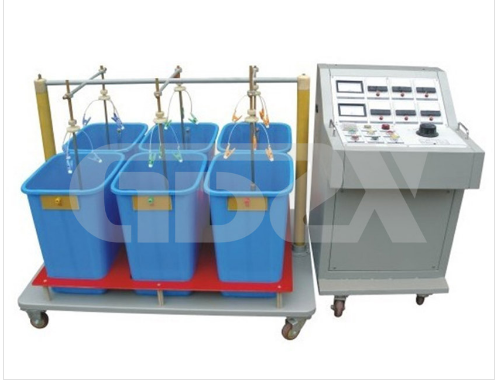
The ZXYTM-Ⅱ Insulating Boots and Gloves Withstand Tester represents a significant advancement in dielectric evaluation equipment for personal protective equipment (PPE) in high-voltage environments. This technical article provides a comprehensive analysis of the system's architecture, operational principles, and performance characteristics for electrical technicians and safety engineers. The apparatus enables simultaneous testing of multiple PPE units with individual leakage current monitoring, addressing critical limitations of conventional sequential testing methodologies
1. Introduction
In electrical power systems maintenance and operation, insulating gloves and boots serve as the primary defense against accidental electric shock for personnel working on or near energized equipment. Regulatory standards mandate periodic dielectric testing of these protective items to verify their insulation integrity and identify aging-related degradation before field failure occurs。
Traditional testing approaches typically involve single-unit sequential testing with limited measurement precision, creating inefficiencies in high-volume testing environments such as utility maintenance depots and third-party testing laboratories. The ZXYTM-Ⅱ system addresses these challenges through an integrated design combining multi-channel measurement capability, automated test sequencing, and real-time leakage current analysis。
2. System Architecture and Technical Specifications
2.1 Core Technical Parameters
The ZXYTM-Ⅱ tester operates with the following fundamental specifications:
Parameter | Specification |
Input Voltage | 0-220V AC, 50Hz |
Output Voltage | 0-30kV (adjustable) |
System Capacity | 3kVA |
Test Capacity | 3 pairs (6 units) per cycle |
HV Test Transformer | 35kg |
Test Carriage | 70kg |
Control Bench | 45kg |
2.2 Distributed Measurement Architecture
The system employs a distributed signal acquisition architecture with six independent detection channels, enabling simultaneous monitoring of each test specimen without cross-channel interference . Each channel provides real-time leakage current measurement with precision sufficient to identify insulation anomalies that might escape detection in aggregated measurement systems.
The independent channel configuration serves two critical functions: first, it allows operators to identify individual failed units within a test batch, preventing unnecessary rejection of compliant equipment; second, it enables comparative analysis of specimens tested under identical voltage stress conditions。
3. Operational Principles
3.1 Test Configuration
The standard test configuration requires preparation of both the test specimens and the apparatus according to established protocols. Test gloves or boots are positioned in the dedicated test carriage with water-filled electrodes establishing electrical contact with both interior and exterior surfaces. The water level is maintained to provide approximately 90mm of exposed insulation surface at the cuff opening, creating a defined creepage path。
3.2 High-Voltage Generation and Control
The system incorporates a resonant topology high-voltage power supply capable of controlled voltage ramping to the target test level. During operation, voltage increases at a controlled rate not exceeding 1kV per second, minimizing transient stress while allowing observation of specimen behavior throughout the ramp。
3.3 Leakage Current Measurement
Throughout the test cycle, each of the six channels continuously monitors leakage current flowing through the respective specimen. Real-time current values are displayed on the control bench interface, providing immediate feedback on insulation performance. When current exceeds predetermined thresholds, the system automatically identifies the non-compliant unit and, depending on configuration, may initiate protective shutdown。
4. Technical Advantages for Power Industry Applications
4.1 Throughput Enhancement
The multi-sample capability fundamentally transforms testing workflow efficiency. Where conventional single-unit testers require sequential loading, testing, and documentation for each specimen, the ZXYTM-Ⅱ completes equivalent testing of six units in a single cycle. Field implementation data indicates throughput improvements of 300-500% compared to legacy equipment 。
4.2 Diagnostic Capability
Independent channel measurement enables detection of insulation degradation patterns that might be masked in aggregate measurements. Subtle increases in leakage current over multiple test cycles can indicate progressive aging of rubber compounds, allowing predictive replacement before dielectric failure occurs. This capability supports transition from simple pass/fail testing to condition-based maintenance strategies。
4.3 Mobility and Deployment Flexibility
The integrated wheelbase design allows repositioning of the test carriage without specialized material handling equipment. This mobility enables deployment in multiple facility locations or transport to field sites where on-site testing reduces logistical overhead associated with PPE transportation。
4.4 Safety Integration
The system architecture incorporates multiple protective features including grounded Faraday cage configuration, fail-safe interlocks, and overcurrent protection with response times under 20ms . These elements ensure operator safety during high-voltage testing operations while protecting test specimens from damage during fault events.
5. Test Procedures and Standards Compliance
5.1 Standard Test Protocol
A typical test sequence following industry standards proceeds as follows:
1.Preparation: Clean specimens and verify environmental conditions (humidity ≤65% RH recommended)
2.Fixture Setup: Position specimens in test carriage with proper water levels
3.Parameter Configuration: Set target voltage and duration according to applicable standards
4.Voltage Ramp: Increase voltage at controlled rate to target level
5.Dwell Period: Maintain test voltage for required duration (typically 3 minutes)
6.Evaluation: Compare individual channel leakage currents to acceptance criteria
7.Documentation: Record results for each specimen
5.2 Acceptance Criteria
Industry standards establish maximum permissible leakage currents for insulating PPE. While specific values vary by equipment class and applicable standard, typical thresholds range from 8-16mA for gloves and 12-18mA for boots depending on voltage class and test protocol。
6. Maintenance Considerations
Long-term reliability of the ZXYTM-Ⅱ system requires adherence to scheduled maintenance procedures. Electrode surfaces should be periodically inspected and polished to maintain consistent contact resistance. Annual calibration verification using reference standards ensures measurement accuracy remains within specified tolerances. The dielectric properties of test fixtures should be validated periodically to eliminate background leakage from affecting specimen measurements 。
7. Conclusion
The ZXYTM-Ⅱ Insulating Boots and Gloves Withstand Tester provides power industry technicians with a comprehensive solution for PPE dielectric testing. Its multi-channel architecture, independent leakage current monitoring, and automated test sequencing address the throughput limitations of traditional testing methods while enhancing diagnostic capability. For organizations responsible for maintaining large inventories of insulating PPE, implementation of this technology represents a significant advancement in both testing efficiency and safety assurance。
GDZX is a manufacturer of power detection equipment, offering a diverse range of products with comprehensive models and providing professional technical support. Contact us at +86-27-6552607 or +86-17396104357.Website: http://en.gdzxdl.com/


