


NEWSnews
ZXR-100A : Features and Applications Explained
Q1: What is a transformer winding resistance tester, and what does the ZXR-100A do?
A: A transformer winding resistance tester is a critical power industry tool used to measure the direct current (DC) resistance of transformer windings—the copper coils that carry electricity inside transformers. The ZXR-100A is a high-performance model built specifically for this task. Think of it as a "health scanner" for transformers: by measuring winding resistance, technicians can spot hidden faults (like loose connections, broken wires, or shorted coils) before they cause equipment failure, power outages, or safety risks. Transformers are the backbone of power grids, so keeping them healthy is essential for reliable electricity supply.
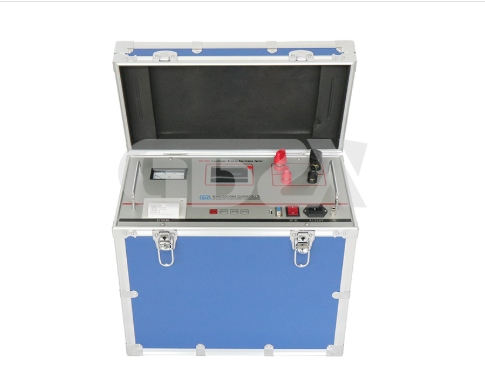
Q2: What makes the ZXR-100A a standout choice for power technicians?
A: The ZXR-100A is designed with both performance and usability in mind, with key benefits that set it apart:
Powerful output & wide range: It delivers up to 100A of test current, with a resistance range spanning 50μΩ to 4Ω across adjustable current gears. This lets it test everything from small distribution transformers to large grid-scale power transformers quickly and accurately.
Portable & user-friendly: At just 12kg with a compact size (390mm×240mm×250mm), it’s easy to transport to on-site substation testing. Its simple operation also means new technicians can get up to speed quickly with minimal training.
Fast, precise, and consistent results: It offers fast test speeds, industry-leading accuracy (±(0.2%+2d)), a 0.1μΩ resolution (to detect tiny resistance changes), excellent repeatability, and strong anti-interference performance—so results are reliable even in noisy, high-voltage power environments.
Top-tier safety features: It has a full set of protection circuits for long-term reliable use, plus an audible discharge alarm with clear visual discharge indication. This prevents dangerous misoperation by alerting technicians when residual charge (stored in transformers) is being discharged, keeping users safe.
Smart automated operation: Powered by a high-speed single-chip microcomputer, it automates key steps like discharge, reducing manual work and human error, and boosting testing efficiency.
Q3: What are the ZXR-100A’s key technical specs, and what do they mean for daily use?
A: Let’s break down its core technical indicators in plain language:
Adjustable output current: 100A, 50A, 20A, 10A, 5A. Technicians can select the right current for the transformer size: higher current (100A) cuts test time for large transformers, while lower current (5A) is ideal for small, low-power transformers.
Wide measuring range (per current gear):
100A: 50μΩ ~ 100mΩ
50A: 100μΩ ~ 200mΩ
20A: 200μΩ ~ 800mΩ
10A: 500μΩ ~ 2Ω
5A: 1mΩ ~ 4ΩThis range covers nearly all transformer winding resistance testing needs, from small distribution units to large power transformers.
0.1μΩ resolution: This means the tester can detect extremely small changes in resistance (as tiny as 0.1 millionths of an ohm), so even minor, early-stage faults are caught before they become serious problems.
±(0.2%+2d) accuracy: This guarantees minimal measurement error, so technicians can trust the results to make critical maintenance decisions.
Portable design: 390mm×240mm×250mm in size, 12kg in weight—perfect for on-the-go field testing at substations and power plants.
Q4: Why is accurate winding resistance testing so critical for power grids?
A: Transformers are essential for stepping voltage up (for long-distance power transmission) and down (for home/business use), so their reliability directly impacts power supply stability. Winding resistance is a key health metric for transformers:
Higher-than-normal resistance can signal loose connections, broken wires, or poor contact in windings, which can cause overheating and equipment failure.
Lower-than-normal resistance can indicate shorted turns in the winding, a dangerous fault that can lead to catastrophic transformer failure and unplanned power outages.Regular, accurate testing with the ZXR-100A lets power companies perform proactive maintenance, catch faults early, avoid costly outages, and ensure the safety of power equipment and personnel.
Q5: Who uses the ZXR-100A, and in what common scenarios?
A: The ZXR-100A is a versatile tool for a wide range of power industry professionals and use cases:
Target users: Power grid maintenance technicians, transformer manufacturing quality inspectors, substation engineers, and electrical testing service providers.
Common applications:
Factory acceptance testing: Verifying the quality of new transformers before they leave the manufacturing facility.
On-site commissioning: Testing transformers after installation to ensure they meet safety and performance standards.
Preventive maintenance: Routine testing of transformers in substations to catch early faults and extend equipment lifespan.
Fault diagnosis: Troubleshooting transformers with suspected issues to identify root causes and plan repairs.Its combination of portability, accuracy, and ease of use makes it suitable for both controlled laboratory testing and harsh on-site power environments.
GDZX is a manufacturer of power detection equipment, offering a diverse range of products with comprehensive models and providing professional technical support. Contact us at +86-27-6552607 or +86-17396104357.Website: http://en.gdzxdl.com/


