


NEWSnews
Technical Deep Dive: ZX-RLC01 Gas Relay Calibrator
Introduction
Gas relays (also known as Buchholz relays) are critical safety components of oil-immersed power transformers, designed to detect internal faults and prevent catastrophic equipment failure. The ZX-RLC01 Gas Relay Calibrator represents a new generation of integrated test equipment engineered to validate the functional performance of these relays, ensuring they operate reliably under both normal and fault conditions. This article provides a comprehensive technical overview of the calibrator’s design philosophy, core features, and performance specifications for field and laboratory engineers.
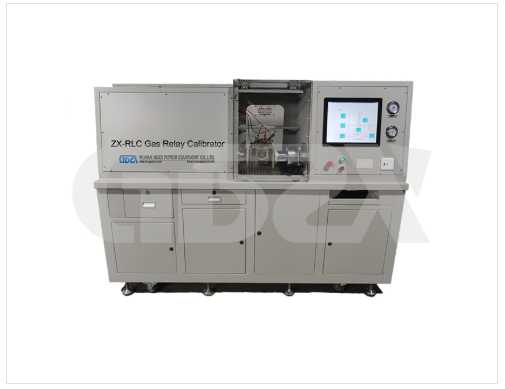
1. Integrated Design Philosophy
The ZX-RLC01 is built around a compact, all-in-one architecture that eliminates the bulk and complexity of traditional multi-pipe test systems. At its core, the device integrates a full-color capacitive touch display, wireless keyboard, and mouse, enabling intuitive control of all test workflows—including flow rate adjustment, volume calibration, and seal integrity testing. The embedded system supports real-time editing, on-site printing of test reports, and persistent data storage for post-test review, eliminating the need for external computing devices and streamlining the entire calibration process.
A key design innovation is the single-pipe structure, which significantly reduces the footprint and operational costs compared to conventional three-pipe systems. The embedded design, paired with a user-friendly interface, delivers a high degree of automation, minimizing manual intervention and reducing the risk of human error during testing.
2. Core Technical Features
2.1 High-Speed Data Acquisition System
The calibrator employs an advanced CAN bus architecture for communication between the upper and lower control units. This architecture drastically improves the response time of high-speed data acquisition and extends the service life of the system. The unit is equipped with three pairs of sampling nodes for heavy gas flow rate and light gas volume measurements, allowing it to sample three independent test points in a single run and simultaneously display the status of each node. This multi-node capability is particularly valuable for batch testing or comparative analysis of relay performance across different operating conditions.
2.2 Optimized Pipeline Structure
The main detection pipeline is constructed with an 80-caliber primary section, complemented by tapered transitions to 25-caliber and 50-caliber pipes. This design ensures that flowmeters and relays are installed with sufficient straight flow sections—meeting the 8D upstream and 5D downstream requirements of international fluid dynamics standards. This eliminates flow turbulence and ensures accurate, repeatable flow rate measurements, a critical factor in validating relay actuation thresholds.
2.3 Precision Flow Rate Control
Flow rate regulation is achieved using a vector frequency converter to drive a centrifugal oil pump. This control method eliminates pulsating flow, which is a common source of measurement error in traditional systems, and stabilizes oil flow through the test loop. Two dedicated flowmeters are used for pulse-output high-speed frequency measurement:
A 25-caliber flowmeter for testing 25mm relays
A 50-caliber flowmeter for testing 50mm and 80mm relays
Flow velocity is calculated using the formula V=Qv/S, where V is velocity, Qv is volumetric flow rate, and S is pipe cross-sectional area. This direct calculation method ensures high accuracy in flow rate detection, a primary parameter for verifying heavy gas actuation.
2.4 Accurate Volume Calibration
Light gas volume measurements rely on the pulse-counting method using a gear metering pump. The calibrator controls the pump motor speed via analog output signals, recording every pulse with high precision. This method significantly improves both the accuracy and range of volume detection, which is essential for verifying the relay’s response to slow-developing faults that generate light gas.
2.5 Pressure and Clamping Systems
Pressure Control: The centrifugal oil pump applies oil pressure through rotation blocking, with a pressure transmitter sampling analog signals for real-time monitoring.
Clamping Mechanism: A unilateral suspension centering hydraulic automatic clamping system secures the relay during testing, with concentric deviation limited to less than ±3mm. This design drastically reduces manual clamping effort while ensuring consistent alignment for accurate seal testing.
2.6 Human-Computer Interaction
Building on its integrated design, the calibrator’s touchscreen interface allows operators to execute all test workflows—including flow rate adjustment, volume calibration, and seal testing—with intuitive controls. Test reports can be edited and printed on-site, and all data is stored internally for future review, eliminating the need for manual record-keeping and improving traceability.
3. Key Technical Indicators
The following specifications define the performance capabilities of the ZX-RLC01 for gas relay calibration:
Parameter | Specification |
Heavy Gas Flow Rate Detection | φ25mm: 0.6 ~ 4.2 m/sφ50mm: 0.6 ~ 3.2 m/sφ80mm: 0.6 ~ 2.2 m/s |
Light Gas Volume Detection | Range: 0 ~ 950 mLAccuracy: ±1.0% |
Seal Detection | Pressure Range: 0 ~ 250 kPaTime Range: 1 ~ 60 minPressure Accuracy: ±0.5% |
QJ-40 Relay Detection | Range: 1 ~ 150 mmAccuracy: ±1.0% |
System Precision | Flow Rate: 1.5 grade (Flowmeter accuracy: 0.5 grade)Display Resolution: 0.00 m/s (flow), 0.0 mL (volume), 0.0 kPa (pressure), 0.0 mm (displacement) |
4. Conclusion
The ZX-RLC01 Gas Relay Calibrator represents a significant advancement in transformer protection testing technology. Its integrated single-pipe design, high-speed CAN bus control, precision flow/volume measurement systems, and user-friendly interface combine to deliver a reliable, efficient solution for validating gas relay performance. By streamlining calibration workflows and improving measurement accuracy, the calibrator helps ensure the proper function of these critical safety devices, ultimately enhancing the reliability of oil-immersed power transformers in service.
GDZX is a manufacturer of power detection equipment, offering a diverse range of products with comprehensive models and providing professional technical support. Contact us at +86-27-6552607 or +86-17396104357.Website: http://en.gdzxdl.com/


