


NEWSnews
ZX-Q15:Bridge Methods for High-Resistance Cable Fault Location
High-resistance faults are among the most challenging defects encountered in power cable systems. Unlike low-resistance short circuits, high-resistance faults often generate weak fault currents, making them difficult to detect with conventional testing methods. Accurate fault location is essential for reducing outage duration, minimizing excavation costs, and improving the reliability of power distribution networks. Bridge-based fault locating instruments remain one of the most reliable solutions for locating these faults with high precision.
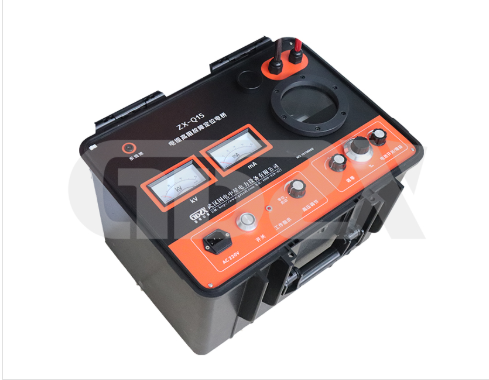
Principle of Bridge-Based Fault Location
A cable fault location bridge operates according to the balanced bridge measurement principle. During testing, the instrument generates a stable high-voltage DC constant current source that is injected into the faulted cable. By comparing the resistance of different sections of the conductor, the bridge reaches a balanced condition. The proportional relationship between resistance and cable length is then used to calculate the distance from the test point to the fault.
Since conductor resistance is directly proportional to its length under uniform conditions, the measured resistance ratio can be accurately converted into the physical fault location. This method provides excellent measurement accuracy for high-resistance faults where other techniques may produce unstable results.
Four-Terminal Resistance Measurement
One important feature of professional bridge testers is the four-terminal resistance measurement method. Traditional two-wire measurements include the resistance of test leads, which becomes significant when measuring very small resistance values. The four-terminal method separates the current circuit from the voltage measurement circuit, effectively eliminating errors introduced by lead resistance.
This measurement technique significantly improves positioning accuracy, particularly for long-distance high-voltage cables where cable resistance differences are relatively small.
High-Voltage Constant Current Source
A bridge tester designed for high-resistance cable faults typically incorporates a continuously adjustable DC high-voltage source. The constant current output ensures stable testing conditions throughout the measurement process, allowing accurate resistance calculation even when fault resistance changes slightly.
Typical technical characteristics include:
Adjustable DC test voltage up to 15 kV
Maximum constant current of 30 mA
Continuously adjustable burn-through voltage
Stable current output during bridge balancing
The constant current design also enhances measurement repeatability and improves the reliability of fault location results.
Burn-Through Function
Many high-resistance faults are caused by carbonized insulation, moisture ingress, or partial dielectric breakdown. These faults may initially exhibit unstable or extremely high resistance, making direct bridge measurements difficult.
The burn-through function applies controlled high-voltage energy to the fault point, gradually reducing the fault resistance by carbonizing the defective insulation path. After the resistance decreases to a stable value, bridge measurement can be performed with much higher accuracy.
This integrated function reduces the need for additional external burn-through equipment and improves field testing efficiency.
Practical Applications
Bridge-based cable fault location is widely used in various sectors of the electric power industry.
Power utilities use bridge testers to quickly locate underground cable faults, reducing service interruption time and maintenance costs.
Industrial power users employ the instrument for preventive maintenance and emergency troubleshooting within factories, substations, and industrial parks.
Cable manufacturers use bridge measurement during production and quality inspection to locate conductor discontinuities or insulation defects before cable delivery.
The bridge method is also frequently combined with other fault location techniques, such as wave reflection (Time Domain Reflectometry, TDR), to improve overall diagnostic accuracy.
Advantages of Bridge Fault Location
Compared with many conventional fault location techniques, bridge-based instruments provide several technical advantages:
High positioning accuracy for high-resistance faults
Reduced influence of lead resistance through four-terminal measurement
Stable constant-current testing for reliable measurements
Integrated burn-through capability for difficult faults
Lightweight portable design suitable for field operation
High-voltage output with safe insulated operation
These characteristics make bridge testers particularly effective for medium- and high-voltage cable maintenance.
Conclusion
High-resistance cable faults continue to present significant challenges in modern power systems. Bridge fault location technology combines precision resistance measurement, high-voltage constant current excitation, and four-terminal measurement techniques to provide reliable fault positioning. When equipped with an integrated burn-through function, the instrument becomes an efficient solution for locating difficult cable faults while minimizing maintenance time and improving power system reliability. For electrical engineers and cable maintenance professionals, understanding the operating principles and practical applications of bridge-based fault location is essential for effective cable diagnostics and asset management.
GDZX is a manufacturer of power detection equipment, offering a diverse range of products with comprehensive models and providing professional technical support. Contact us at +86-27-6552607 or +86-17396104357.Website: http://en.gdzxdl.com/


