


NEWSnews
ZXDN-3600:Application and Technical Analysis of Handheld PQA in Power Systems
Abstract
Power quality issues have become a critical factor restricting the safe, stable and economic operation of modern power grids. Harmonic distortion, three-phase unbalance, voltage fluctuation and flicker frequently occur along with the large-scale integration of new energy power generation, nonlinear loads and power electronic equipment. Reliable field testing instruments are essential for capturing power quality disturbances, locating faults and verifying the performance of governance equipment. This paper takes the ZXDN-3600 handheld power quality analyzer as a typical research object, systematically introduces its functional characteristics, core technical specifications, and discusses its practical application value in power grid commissioning, on-site monitoring and power quality diagnosis.
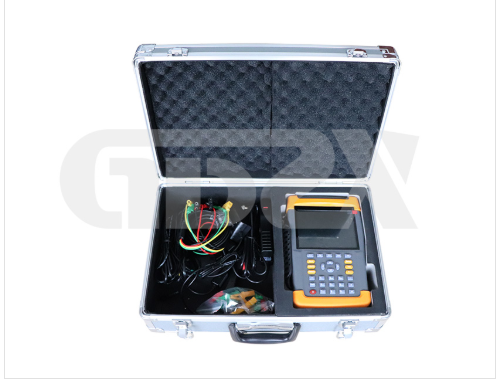
1. Introduction to ZXDN-3600 Handheld Power Quality Analyzer
The ZXDN-3600 handheld power quality analyzer is a high-precision portable testing instrument designed for power quality detection. It targets mainstream power quality disturbances in power grids, including waveform distortion, harmonic pollution, voltage fluctuation and flicker, three-phase unbalance. Meanwhile, it integrates basic electrical parameter measurement and vector analysis functions, realizing all-in-one field measurement for power quality assessment.
Different from fixed monitoring devices, this handheld device takes field test scenarios as the core design orientation. It can be widely deployed for on-site inspection of distribution networks, commissioning of reactive power compensation and filtering devices, long-term load fluctuation tracking, and laboratory standard measurement.
2. Core Functional Features
2.1 Basic Electrical Measurement & Vector Diagnosis
The instrument supports comprehensive measurement of voltage, current, active power, reactive power, phase angle, power factor, frequency and other electrical parameters. It can display real-time voltage and current vector diagrams. Engineers can quickly judge the correctness of field wiring through vector graphics, which effectively avoids measurement errors caused by wrong wiring in field tests.
Current measurement adopts external clamp transformers. Measurement can be carried out without breaking the current loop, improving operation safety and testing efficiency. Multiple specifications of clamp transformers are optional, covering 5A/25A, 100A/500A and 400A/2000A to adapt to loads of different current levels.
2.2 Comprehensive Power Quality Analysis
It complies with general power quality detection requirements for public grids, supporting measurement and analysis of frequency deviation, voltage deviation, voltage fluctuation, flicker, three-phase voltage unbalance and grid harmonics. The maximum harmonic analysis order reaches the 63rd order, which meets the testing requirements for harmonic emission of most nonlinear loads.
Single-phase and three-phase voltage & current real-time waveforms can be displayed synchronously. All testing interfaces support screen locking, convenient for engineers to read and analyze waveform data on site.
2.3 Long-term Data Recording & Dynamic Monitoring
The device supports customizable data storage intervals and continuous automatic data recording. Equipped with large-capacity data memory, it can continuously store test data for more than 18 months under a 1-minute recording interval, fully meeting the requirements of long-term power quality monitoring tests.
Two typical monitoring scenarios are supported:
Load fluctuation monitoring: Continuously record the variation of voltage, current, power and phase parameters under different working conditions of electrical equipment, and analyze the disturbance impact of loads on grid power quality.
Dynamic process monitoring: Track the adjustment and operation process of power equipment, assist technicians in troubleshooting problems during equipment commissioning. In addition, it can quantitatively evaluate the dynamic performance of reactive power compensation and filtering devices, and verify whether technical indicators meet design standards.
2.4 Data Export, Software Interaction & Human-machine Design
A standard USB interface is reserved for direct data export to background computers. Matched professional data management software supports real-time sampling data uploading, offline data analysis and automatic report generation. The equipment is equipped with a perpetual calendar and clock module. Test data carries accurate time stamps, supporting serial port data uploading and computerized data management.
The hardware adopts a large imported color LCD screen with English operation interface and multi-parameter simultaneous display. Conductive silicone keys bring comfortable operation experience. To extend battery life, the LCD screen automatically enters power-saving mode after 3 minutes of inactivity. Built-in high-capacity lithium-ion battery supports continuous operation for over 10 hours after full charging. Compact size and light weight enable flexible switching between field measurement and laboratory standard testing.
3. Main Technical Specifications
3.1 Input Parameters
Voltage measurement range: 0 ~ 800 V, automatic ranging
Optional clamp transformers: 5A/25A (standard); 100A/500A, 400A/2000A (optional)
Phase angle measurement range: 0 ~ 359.99 °
Frequency measurement range: 45 ~ 55 Hz
Channels: 3 voltage channels (UA, UB, UC), 3 current channels (IA, IB, IC)
Maximum harmonic analysis order: 63rd order
3.2 Measurement Accuracy
Electrical parameter measurement accuracy
Voltage: ±0.1%
Frequency: ±0.01 Hz
Current and power: ±0.5%
Phase angle: ±0.2 °
Power quality measurement accuracy
Fundamental voltage error: ≤0.5% F.S.
Fundamental current error: ≤1% F.S.
Phase difference error of fundamental voltage and current: ≤0.2 °
Harmonic voltage content rate error: ≤0.1%
Harmonic current content rate error: ≤0.2%
Three-phase voltage unbalance error: ≤0.2%
Voltage deviation error: ≤0.2%
Voltage fluctuation error: ≤0.2%
3.2 Environmental and Physical Parameters
Operating temperature: -10 ℃ ~ +40 ℃
Charging power supply: AC220 V, 45 Hz ~ 55 Hz
Host power consumption: ≤3 VA
Continuous battery working time: ≥10 h
Insulation: Voltage and current input terminals to enclosure insulation resistance ≥100 MΩ; power supply input withstands 1.5 kV power frequency voltage to enclosure for 1 minute
Dimension: 320 × 240 × 130 mm
Weight: 2.0 kg
4. Application Scenarios in Power Industry
Distribution network power quality patrol: Quickly capture harmonic, unbalance and voltage disturbance problems on site.
New energy station acceptance: Detect power quality emission indicators of photovoltaic and wind power generation units.
Testing of reactive power compensation, active filter and harmonic governance equipment: Complete dynamic index test and effect evaluation.
Industrial user energy consumption diagnosis: Analyze power quality disturbance caused by rectifiers, frequency converters and other nonlinear loads.
Equipment commissioning and fault troubleshooting: Use vector diagram and waveform functions to check wiring and track transient disturbance.
Laboratory performance verification: Used as standard portable measuring equipment for repeated tests.
5. Conclusion
With the continuous development of new energy and power electronics, power quality monitoring presents higher requirements for portability, testing precision and long-term recording capability. The ZXDN-3600 handheld power quality analyzer integrates multi-dimensional power quality analysis, electrical parameter testing and long-term data recording. Its flexible configuration of current clamps, complete accuracy indicators and portable structure make it a practical testing tool for field engineers.
In future power grid construction, portable power quality analyzers will play an increasingly important role in disturbance source location, governance effect verification and daily power quality management. Engineers should reasonably select testing equipment according to field load characteristics, formulate standardized monitoring schemes, and rely on accurate measurement data to support the safe and high-quality operation of power systems.
GDZX is a manufacturer of power detection equipment, offering a diverse range of products with comprehensive models and providing professional technical support. Contact us at +86-27-6552607 or +86-17396104357.Website: http://en.gdzxdl.com/


