


NEWSnews
Power-Frequency Withstand Testing: Parameters, Selection & Configuration
四、6 Key Parameters to Check Before Purchase
Parameter 1: High-Voltage Output (kV)
Determines the maximum voltage level the equipment can be used to test. The voltage value stated in the quotation is the RMS value, not the peak value. For a 10 kV system, the withstand test voltage is approximately 34 kV; a 50 kV model is recommended to provide sufficient margin. For a 35 kV system, the test voltage is approximately 68 kV; a 100 kV model is recommended. The high-voltage rating should not be exactly equal to the required test voltage. A 20%–30% margin should be reserved; otherwise, prolonged operation at the upper limit may accelerate equipment aging.
Parameter 2: Rated Capacity (kVA)
Capacity is often underestimated and is a common reason why equipment cannot meet actual testing requirements after purchase. For non-capacitive test objects, such as switchgear and transformers, the required capacity is relatively small. For capacitive test objects, such as cables and bushings, the required capacity is proportional to the capacitance and must be calculated. See Chapter 11 for details.
Parameter 3: Transformer Type (Oil-Immersed / Gas-Insulated / Dry-Type)
The three types differ significantly in weight, moisture resistance, partial-discharge performance, and maintenance costs. See Chapter 6 for details.
Parameter 4: Control Mode (Manual / Automatic)
Determines the operating mode and report output method. Automatic models provide one-button voltage boosting, automatic timing, and automatic report printing, while manual models require full manual control throughout the test. See Chapter 7 for details.
Parameter 5: Three Protection Functions (Must Be Verifiable)
1.Overcurrent Protection: Automatically trips when the current exceeds the preset limit.
2.Overvoltage Protection: Automatically cuts off the power when the voltage exceeds the preset limit.
3.Zero-Position Interlock: Prevents closing the circuit breaker when the voltage regulator is not in the zero position.
These three functions are the basic safety requirements of the equipment. During procurement, the supplier must clearly specify them and provide on-site verification.
Parameter 6: Measurement Accuracy and Calibration Certificate
According to JJG 1052, test transformers are subject to mandatory verification. The accuracy specified in the product documentation is: voltage ≤1.5% ±1 digit (F.S.); current ≤1.5% ±1 digit (F.S.). The purchase contract should clearly specify the accuracy requirements and require a valid CMA metrology verification certificate.
五、Specifications for Different Test Objects
5.1 Insulating Rods (Safety Tools)
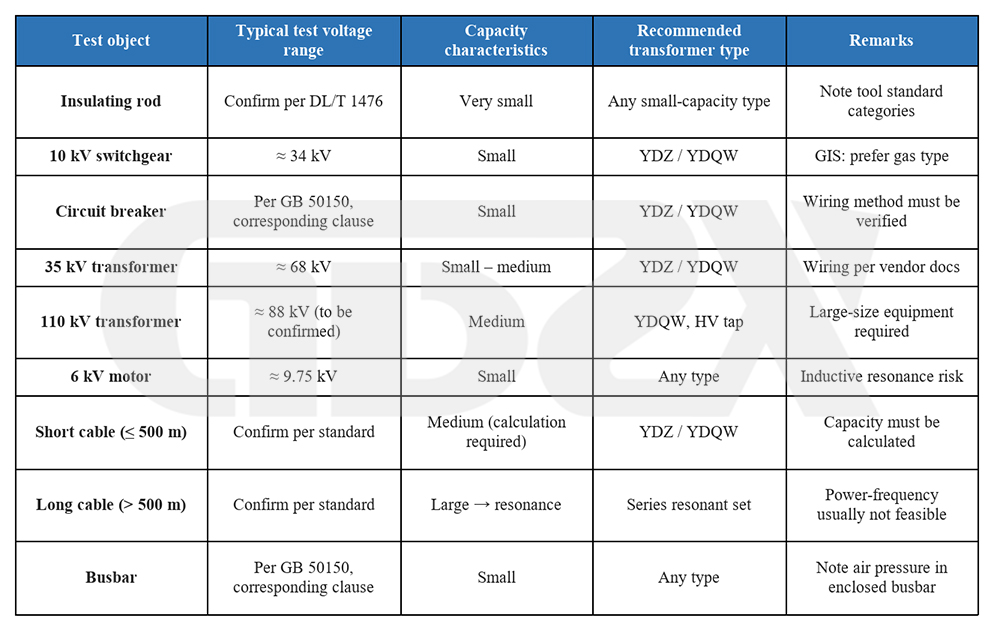
Insulating rods are safety tools. Test requirements shall be implemented according to the applicable voltage levels and clauses specified in DL/T 1476-2023. Operating rods, measuring rods, and voltage detectors have different requirements and must not be used interchangeably. The specific test voltage shall be confirmed against the applicable clauses of DL/T 1476 and is not determined solely by the fact that the system is rated at 10 kV. The required capacity is very small, and a capacity of 5 kVA or less is generally sufficient.
5.2 Switchgear (10 kV System)
The withstand test voltage for commissioning is approximately 34 kV (80% of the factory test voltage; the specific requirements shall be implemented according to the applicable clauses in Chapter 6 of GB 50150-2016). The capacity requirement is low, and 5 kVA or less is sufficient for most applications. For GIS switchgear, gas-insulated types are preferred where partial-discharge performance is required.
5.3 Circuit Breakers
The test voltage shall be determined according to the applicable clauses for the rated voltage level of the circuit breaker in GB 50150-2016 and must not simply use the values specified for switchgear. The capacity requirement is low. Due to the complex structure of the arc-extinguishing chamber, the test wiring method shall be confirmed according to the manufacturer's documentation.
5.4 Power Transformers
The commissioning test voltage is generally 80% of the factory test voltage. The specific values shall be determined according to the applicable voltage-level clauses in Chapter 7 of GB 50150-2016 (approximately 68 kV for 35 kV systems and 88 kV for 110 kV systems; the applicable clauses must be verified). A capacity of 5–20 kVA covers most applications. When the high-voltage side uses a delta connection, the wiring method shall be confirmed according to Chapter 7 of GB 50150-2016 and the manufacturer's factory test wiring diagram and must not be determined by assumption.
5.5 Motors (6 kV / 10 kV)
Commissioning test voltage = 1.5U + 750 V (U is the rated voltage in kV). For example, the test voltage for a 6 kV motor is approximately 9.75 kV. The applicable requirements shall be verified against Chapter 17 of GB 50150-2016. The capacity requirement is low, and 5 kVA is generally sufficient.
5.6 Cables (10 kV and Above)
Cables are the test objects with the most complex capacity requirements and must be calculated rather than estimated. The test voltage shall comply with Chapter 19 of GB 50150-2016 (Note: the standard contains special provisions for XLPE cables, which must be specifically verified). For short cables of up to 500 m, power-frequency withstand testing may be feasible. For cables longer than 500 m, the required capacity must be calculated. If it exceeds the equipment capacity, a series-resonant test system should be considered instead.
5.7 Busbars (Including Enclosed Busbars)
The applicable requirements shall be implemented according to the corresponding sections of GB 50150-2016 and the rated voltage level. The capacity requirement is low. Before testing enclosed busbars, the gas pressure and sealing condition must be confirmed.
5.8 Summary of Test-Object Selection
六、Oil-Immersed, Dry-Type, or Gas-Insulated: How to Choose and Match with the Control Box/Console
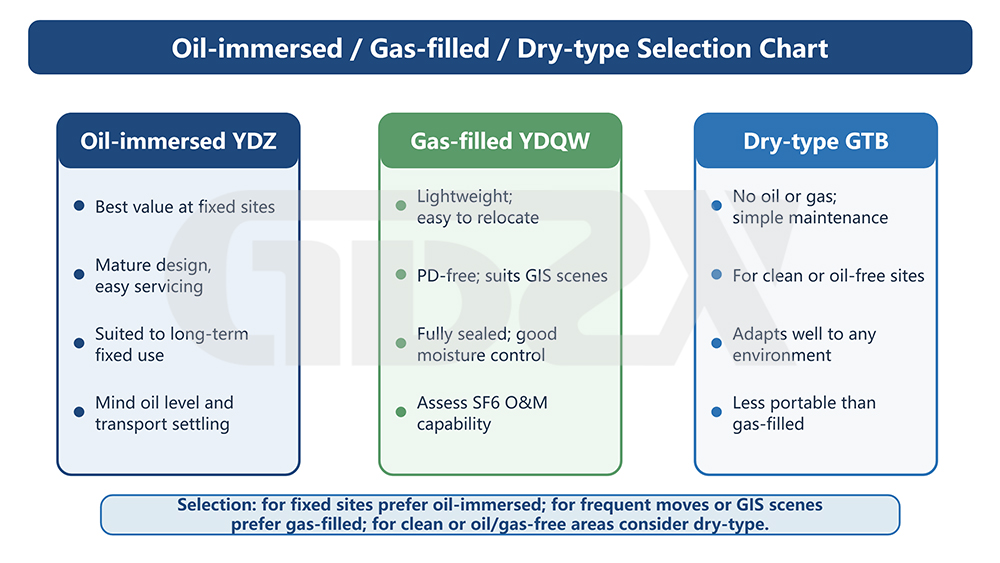
Oil-Immersed / Gas-Insulated / Dry-Type Procurement Selection Guide
Start with the conclusion, then explain why.
Conclusion:
1.Fixed location, infrequent field use, and limited budget → Choose the oil-immersed YDZ series.
2.Frequent field work, frequent handling, high-humidity environments, or partial-discharge-free requirements → Choose the gas-insulated YDQW series.
3.Cleanrooms or special applications where oil and gas are prohibited → Choose the dry-type GTB series.
6.1 Oil-Immersed Type (YDZ Series)
Among the three types, the oil-immersed type has the lowest purchase cost, a mature structure, and relatively simple maintenance. The core is made of high-quality laminated silicon steel sheets, with transformer oil used as the insulating medium. Its size and weight are moderate. It is suitable for fixed locations where frequent transportation is not required and is a preferred choice for indoor laboratories or permanent test stations.
What to confirm before purchase: Establish a regular oil inspection plan and confirm the required oil level during transportation. Some oil-immersed models must remain stationary for a certain period after inclined transportation before use.
6.2 Gas-Insulated Type (YDQW / YDQ Series)
Product documentation specifies that the YDQW series is a gas-insulated, partial-discharge-free test transformer. The windings are molded with epoxy resin, resulting in a compact and lightweight design. Depending on the model, the weight can be reduced by 20%–60% compared with an oil-immersed unit of the same capacity. A single unit can provide high-voltage output up to 300 kV. With partial-discharge-free performance, a fully enclosed structure, and good moisture resistance, it is suitable for outdoor and frequently mobile testing.
Three factors are particularly important for procurement decisions:
First, weight advantage. In applications involving frequent transportation, the additional effort, time, and transportation costs required for each handling operation are real hidden costs. The weight advantage of gas-insulated units becomes increasingly significant over repeated use.
Second, partial-discharge-free performance. If the test objects include GIS equipment or there are explicit partial-discharge requirements, the gas-insulated type is the appropriate option; oil-immersed and conventional dry-type units do not meet this requirement.
Third, SF₆ maintenance costs. Gas-insulated units require regular gas-pressure inspection using specialized equipment. Leak handling and end-of-life disposal must be performed by qualified personnel. If the user does not have the necessary capabilities in-house, purchasing a gas-insulated unit means that subsequent maintenance may need to be outsourced, and these costs should be included in the budget.
What to confirm before purchase: Factory SF₆ filling pressure, sealing test report, and the manufacturer's leak-detection procedures or service support.
6.3 Dry-Type (GTB Series)
The dry-type transformer uses neither oil nor gas, with windings molded in epoxy resin and high dielectric strength. Its main advantage is simple maintenance: there is no oil or gas, eliminating the risk of insulating-medium leakage. It is suitable for special applications where environmental cleanliness is important or where oil and gas are explicitly prohibited. Its purchase cost is comparable to that of the oil-immersed type.
When not to choose the dry type: When high portability and low weight are required, it is less suitable than the gas-insulated type. When the budget is limited and there are no special environmental requirements, the oil-immersed type generally offers a better cost-performance balance.
6.4 How to Match the Three Transformer Types with the Control Unit
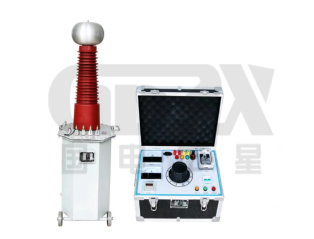
After selecting the transformer type in Chapter 6, many purchasers ask the next question: Should it be equipped with a control box or a control console? Looking only at the appearance can easily lead to an improper configuration.
A more reliable approach is to consider the operating location, transportation frequency, test frequency, and reporting requirements together.
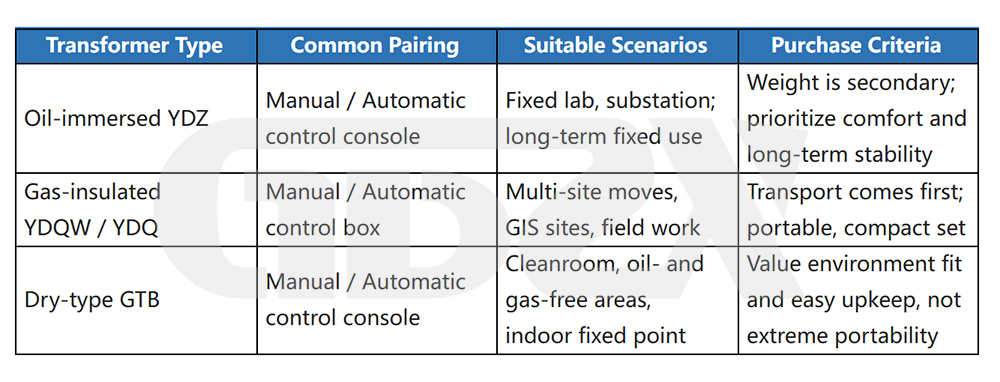
From a procurement perspective, fixed-use applications are generally more convenient with an oil-immersed or dry-type transformer + control console, while frequent transportation is generally more efficient with a gas-insulated transformer + control box.
If a project involves both a fixed test site and occasional field work, the manufacturer can also provide a split configuration based on a standard platform. However, the transportation method, access dimensions, and wiring convenience should be confirmed in advance.
| Control Console | Control Box |
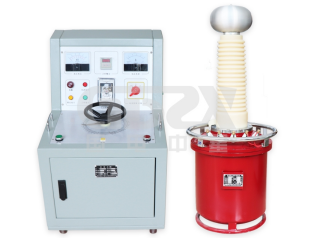 |  |
To make the common configurations more practical for procurement and easier to apply directly to equipment selection:
1.Oil-Immersed + Manual Control Console: Suitable for fixed locations, budget-sensitive projects, and applications with a relatively low testing frequency, such as in-house test laboratories of general industrial plants and construction companies
2.Oil-Immersed + Automatic Control Console: Suitable for permanent test laboratories, batch commissioning tests, and projects requiring standardized printed test reports.
3.Gas-Insulated + Manual Control Box: Suitable for occasional field work where portability and budget control need to be balanced.
4.Gas-Insulated + Automatic Control Box: Suitable for on-site GIS testing, maintenance inspections, and multi-site transportation. This is one of the most common configurations for mobile applications.
5.Gas-Insulated + Automatic Control Console: Suitable for fixed, high-frequency applications that require both partial-discharge-free performance and a permanent test setup, such as professional laboratories for higher voltage levels.
6.Dry-Type + Control Console: Suitable for cleanrooms, oil-free environments, and organizations with stringent environmental compatibility requirements.
If the specifications of common standard models are further translated into procurement-oriented criteria, the typical market configurations can be understood in the following levels:
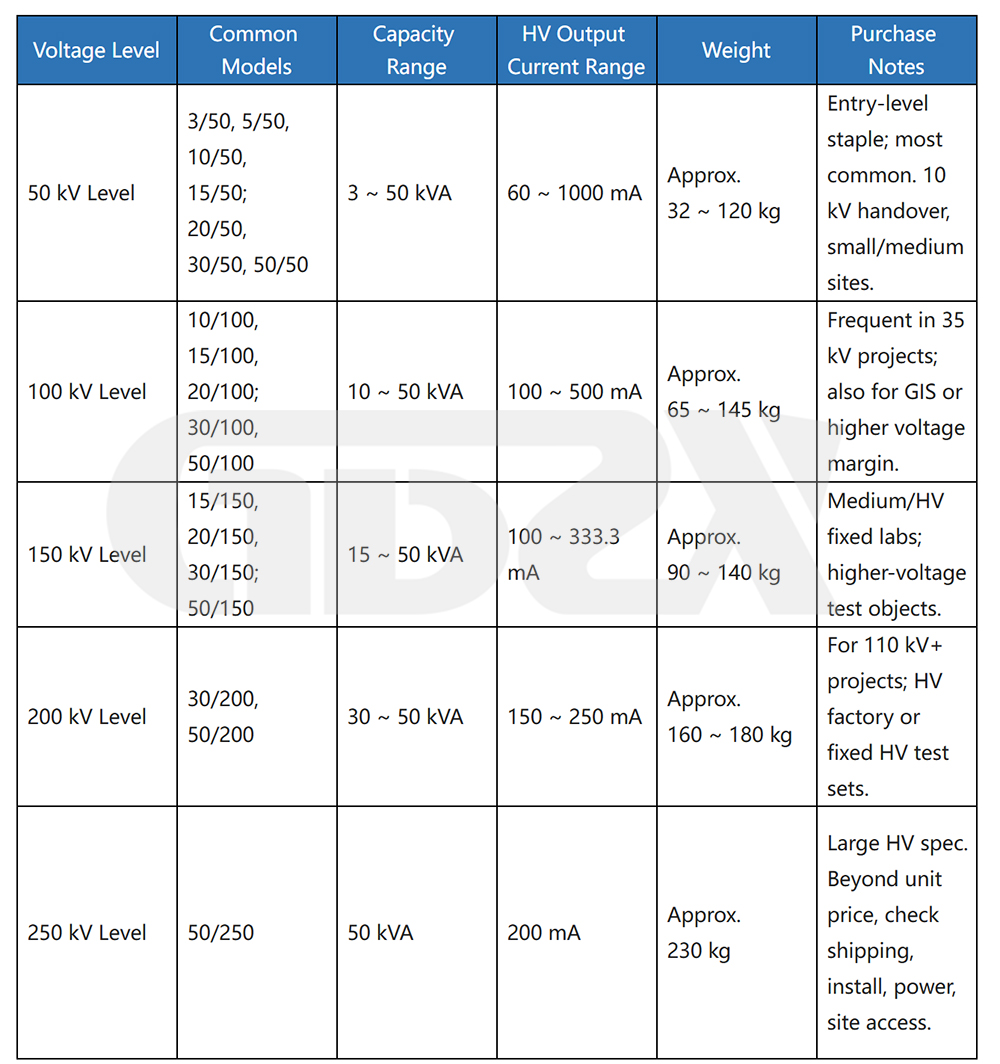
From these standard specifications, purchasers can identify at least three key patterns:
1.Inpt power: Small-capacity, lower-voltage models commonly use a 200 V input, while many higher-capacity models switch to a 400 V input. The available site power supply should therefore be confirmed before procurement.
2.Size and weight: As the rated voltage increases, equipment height and weight generally increase significantly. For example, conventional 50 kV models may start at around 30 kg, while 200 kV and 250 kV models often reach approximately 160 kg and 230 kg, respectively.
3.Output current: Even for models rated at the same nominal voltage, such as 100 kV or 150 kV, th high-voltage output current can vary significantly depending on the capacity. Do not evaluate equipment based on the nominal voltage alone; both kVA and mA must be checked together.
Once again, the above information should be used as a reference range for standard models. If a project has additional requirements for dimensions, control functions, mobility, or interfaces for specific test objects, customization is generally possible based on standard models. Such requirements should be clearly specified in the procurement documents in advance.


