


NEWSnews
Simulated Circuit Breaker: Specification Calculations & Procurement Guide
十、Specification Calculations & Application Examples
Example 1: Protection Operating Time Correction
Scenario: During the full-group test, the relay protection tester recorded 
= 185ms. The simulated circuit breaker was set to 100 ms, with a measured calibration value of 102 ms.

The protection operating time is 83 ms. Compared with the setting value of 85 ms (allowable error: ±10 ms), the result is Pass.
Note: If the setting value of 100 ms is used instead of the measured calibration value of 102 ms, the calculated result is 85 ms, matching the setting value. This may appear more favorable, but it is actually an incorrect result. Although the 2 ms difference is small, it may affect the pass/fail determination for protection functions with tight time settings. The measured calibration value must be used.
Example 2: Circuit Resistance Range Selection
Scenario: An ABB SF₆ circuit breaker is installed on-site. The trip coil nameplate specifies DC 110 V, with a coil resistance of approximately 180 Ω.
Range Selection:
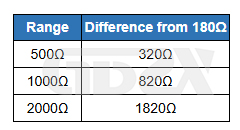
Select the 500 Ω range (the closest available range).
Further verification: Calculate the control circuit monitoring voltage using Formula 3:
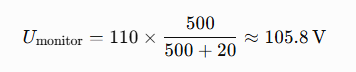
(Assuming the resistance of the other circuit components is approximately 20 Ω.)
The control circuit monitoring threshold of the protection device is typically 70%–80% of DC 110 V, i.e., 77–88 V. The calculated value of 105.8 V is well above this threshold, indicating normal control circuit monitoring with no disconnection alarm triggered.
Example 3: Multi-Channel Synchronization Assessment
Scenario: Four simulated circuit breakers are triggered simultaneously, and the measured actual operating times for each channel are:
1.Channel A: 101.2 ms
2.Channel B: 100.8 ms
3.Channel C: 101.5 ms
4.Channel D: 100.9 ms

The synchronization deviation of 0.7 ms is well below the 2 ms requirement; therefore, the synchronization performance is qualified.
Example 4: Contact Drive Capacity Calculation
Scenario: In a DC 110 V circuit, the simulated circuit breaker's auxiliary contacts must simultaneously drive the following loads:
1.Protection device TWJ input × 1 (equivalent resistance: approximately 5,500 Ω)
2.Protection device HWJ input × 1 (equivalent resistance: approximately 5,500 Ω)
3.Telecontrol device circuit breaker position status inputs × 2 (approximately 4,400 Ω per input)
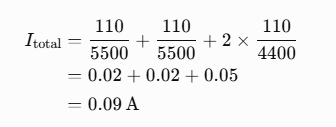
The total current of 0.09 A is far below 5 A. A model with standard 5 A contacts is fully sufficient; upgrading to a 10 A model is unnecessary.
十一、Conclusion: How Procurement Professionals Should Make the Right Decisions
In 2026, procurement mistakes in relay protection integrated test sets and equipment delivery remain common. Some buyers overspend on high-end units with functions they never use; others choose cheaper devices with overstated accuracy, only to find that all integrated test results are invalid and must be repeated.
There is really only one sound procurement path: start from the test tasks, not from the equipment specifications.
Step 1: Confirm the task list. List all types of integrated protection tests planned for the unit during the year. For each test type, identify how many circuit-breaker channels must operate simultaneously, whether breaker-failure protection tests are required, and whether single-phase autoreclosing is needed. This list is the sole basis for equipment selection.
Step 2: Define non-negotiable hard parameters. Based on the task list, determine the minimum number of channels, whether breaker-failure simulation is required, whether independent phase-by-phase operation is needed, and the multi-channel synchronization accuracy requirement. If these parameters are not met, the device cannot be used for the corresponding tests; no matter how low the price, it is effectively unusable.
Step 3: Screen products using the hard parameters. Compile a candidate list of products that meet the hard parameters, and require each vendor to provide measured time-accuracy reports, multi-channel synchronization reports (if applicable), and TWJ/HWJ transition waveforms. Exclude any vendor that cannot supply measured data.
Step 4: Choose among qualified products based on price and after-sales support. Only after technical compliance is confirmed should you compare price, brand reputation, after-sales service, and spare-parts availability. This is the stage for price comparison, not the first step.
Do not reverse-engineer technical requirements from price. Saying “the budget is only X amount, so we can only accept ±10 ms accuracy” is a common but risky approach. It often leads to purchasing devices whose integrated test results lack engineering validity, meaning the money is spent but the tests are still wasted. It is better to reduce the number of units purchased than to compromise on the core accuracy of each device.
One final point: do not skip incoming acceptance testing. Spend half an hour verifying time accuracy, DC boundary conditions, and TWJ/HWJ waveforms. This is the last line of defense for procurement quality. Only units that pass acceptance should be considered successfully procured; if they fail, returns and corrective actions remain the manufacturer’s responsibility, which is far easier to handle than discovering problems at the integrated test site.
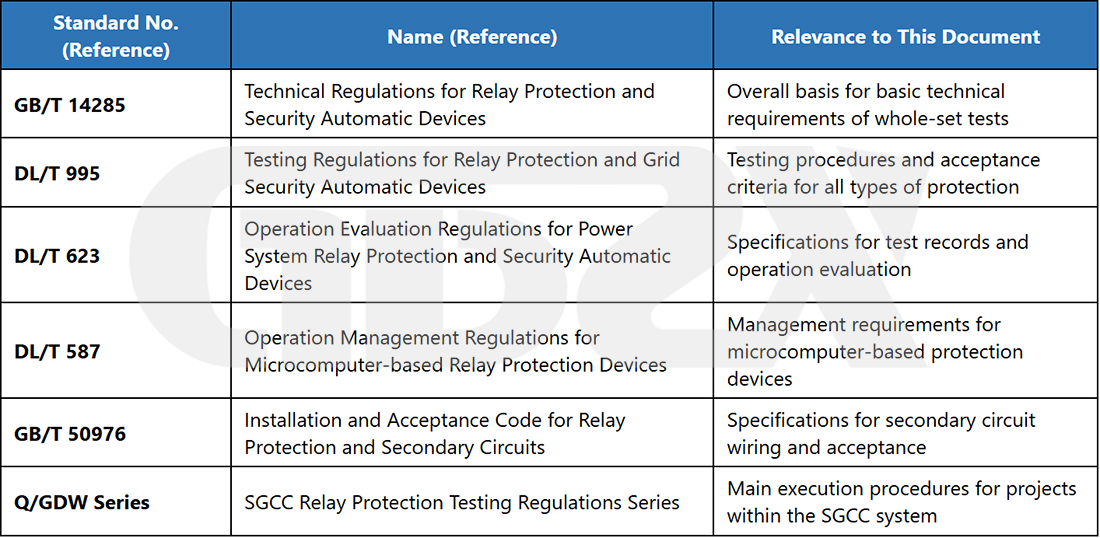
Reference Standards (Use the Currently Valid Editions)
Disclaimer: The following standards are listed for reference only. The currently valid versions published by the Standardization Administration of China, the National Energy Administration, and the relevant issuing authorities shall prevail. The standard numbers cited in this article must not be used as a substitute for reviewing the original texts.
Written by an industry consultant specializing in relay protection full-group testing, secondary circuit commissioning, and electrical testing equipment procurement (2026 Edition).
All parameters are provided for engineering reference only. Actual values shall be subject to the manufacturer's technical specifications and currently applicable regulations.
References to standards shall be based on the currently valid editions. The standards cited in this article do not replace the need to consult the original standard texts.


