


NEWSnews
Smarter Field Testing: How the ZXPT-H Simplifies Voltage Transformer Checks
Introduction
Voltage transformers (VTs) are the quiet guardians of the power grid. They step high voltages down to safe, measurable levels so that meters, relays, and protection systems can do their jobs. But like any precision device, a VT can drift over time. Regular on-site calibration is essential to keep power systems accurate, safe, and reliable.
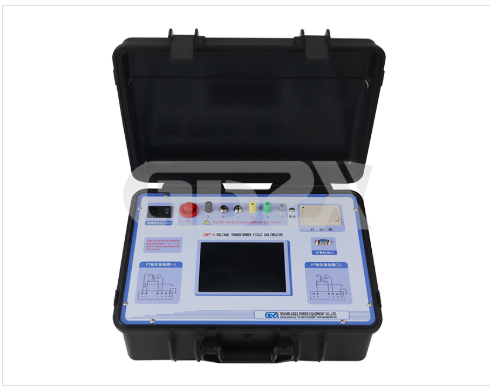
Traditionally, field calibration has been a heavy, time-consuming job. Technicians often had to carry a booster, a separate voltage standard, a load box, and a voltage regulator to the site just to measure ratio error and phase-angle error. The ZXPT-H Voltage Transformer Field Calibrator changes that picture. Built around the latest low-voltage extrapolation method defined in JJG1021-2007 Power Transformer Verification Regulations, this single 12 kg instrument can test electromagnetic VTs from 6 kV up to 220 kV/√3 with an accuracy of 0.05 class. In plain terms, it packs a full calibration lab into one portable box.
What Makes the ZXPT-H Stand Out
One Box, Fewer Headaches
The biggest practical advantage of the ZXPT-H is integration. Instead of hauling four or five separate pieces of equipment to a substation, technicians need only one instrument. It directly measures both the ratio difference and the angle difference of a voltage transformer, which are the two values that matter most for metering and protection accuracy. That means less setup time, fewer cables, and a far smaller chance of leaving an important accessory behind.
Speed That Saves Real Money
Field work is expensive: every extra hour on site costs labor, vehicle time, and often outage windows. The ZXPT-H is designed for speed. A single VT measurement takes no more than one minute. For utilities that need to test dozens of transformers during a maintenance window, that difference adds up quickly.
True Laboratory Accuracy in the Field
A key specification is the 0.03% accuracy level of the built-in standard. That is high enough to test VTs whose own accuracy grades are 0.2, 0.5, or 1 class. Because the internal standard is already calibrated across the full ratio range—from 6 kV/100 V all the way to 220 kV/100 V and their √3 variants—the instrument covers the voltage levels used in most medium- and high-voltage grids.
Built for the Real World
The ZXPT-H does not stop at measurement. It stores up to 1,000 test records, prints results on site through a built-in micro printer, and transfers data to a PC via an RS-232 interface. Its data-management software can also connect with a utility’s Management Information System (MIS), so test records flow straight into the central database instead of sitting in a paper notebook.
The 10.4-inch LCD screen, attached wiring diagrams, and simple operation guide are small details that make a big difference when technicians are working outdoors, often in gloves, and sometimes in poor light. Finally, the unit’s output power is large enough to drive the excitation required for 220 kV class VTs, so it is not limited to lower-voltage equipment.
How It Compares with Traditional Field Test Rigs
Feature | Traditional Field Setup | ZXPT-H Calibrator |
Equipment to carry | Booster, voltage standard, load box, regulator, and more | One 12 kg instrument |
Setup complexity | High; multiple connections and adjustments | Low; wiring diagrams on unit |
Single VT test time | Several minutes or longer | ≤ 1 minute |
Data handling | Manual logging, paper reports | 1,000-record memory, on-site printing, PC/MIS transfer |
Display | Often small or none | 10.4-inch LCD with guided interface |
Voltage coverage | Depends on selected standards | 6 kV to 220 kV/√3 built in |
Accuracy | Varies with external standards | 0.03% internal standard |
Compared with conventional test rigs, the ZXPT-H trades a pile of separate devices for one integrated solution. That does not mean every older method is obsolete; some special applications may still need custom hardware. But for routine electromagnetic VT testing in distribution and transmission substations, the integrated approach is faster, lighter, and easier to repeat from crew to crew.
Under the Hood: What the Specifications Mean
• Low-voltage extrapolation technology: Instead of applying the full high voltage during calibration, the instrument measures the transformer’s behavior at lower, safer voltages and mathematically projects the result to operating voltage. This makes field testing safer without sacrificing accuracy.
• Accuracy class 0.05: The overall calibration accuracy is 0.05 class, meaning the measurement uncertainty is small enough to certify the VT classes commonly used in revenue metering and protection.
• Internal standard accuracy 0.03%: The built-in reference is even more accurate than the instrument’s total stated accuracy, leaving healthy margin to test 0.2-class VTs.
• Compact size (460 × 360 × 210 mm) and 12 kg weight: Roughly the size of a large briefcase, it fits easily in a vehicle and can be carried by one person.
Conclusion
Maintaining voltage transformer accuracy is one of those invisible tasks that keeps the power grid trustworthy. The ZXPT-H Voltage Transformer Field Calibrator makes that task simpler, faster, and more portable than the traditional multi-box approach. By combining measurement, storage, printing, and data networking in a single 12 kg unit, it lets utility crews spend less time managing equipment and more time keeping the lights on.
For utilities, service companies, and grid operators looking to modernize their field testing workflow, the ZXPT-H offers a practical step forward: laboratory-grade accuracy in a package built for the substation yard
GDZX is a manufacturer of power detection equipment, offering a diverse range of products with comprehensive models and providing professional technical support. Contact us at +86-27-6552607 or +86-17396104357.Website: http://en.gdzxdl.com/


